09 September is PAO Awareness Day
Health Information Week UK: 19-26 January
PAO UK reflects on Health Information Week by sharing women’s experiences of Pregnancy Associated Osteoporosis and the need for better diagnosis, care and support.
ADVOCACYPOLICYPAO STORIES
1/26/20265 min read
This Health Information Week volunteers with Pregnancy Associated Osteoporosis (PAO) have been busy raising awareness and advocating for clinical care improvements.
Invisible battles: mental health awareness and support
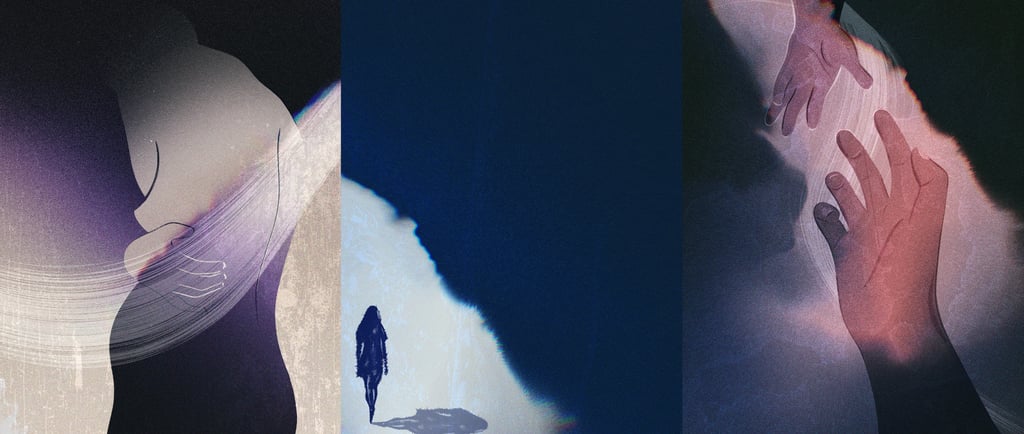
We started the week on Blue Monday, supposedly the saddest day of the year, by sharing Blue Lady – an artist’s depiction of a PAO mum, feeling physically and mentally isolated due to delayed diagnosis and the challenges of every day life as a mother with our rare type of osteoporosis. We highlighted how any woman with PAO who is feeling blue (or a family member) can contact our charity for peer support and help, and also shared links to crisis organisations such as the Samaritans.
Entitled Invisible Battles the painting was created as part of an art collaboration with CamRare and LifeArc, showing how art can clearly and powerfully convey difficult and complicated healthcare information. Two of our PAO UK Trustees: Kathryn Berg (Edinburgh University Trials Manager & PAO Researcher) and Karen Whitehead MBE (PAO UK Co-Chair & Patient Researcher), plus a wider group of PAO mothers, worked collaboratively with artist Rhyanna Halasovski over a number of months to create the Triptych.
We invited PAO women to share their stories for change
We encouraged women with PAO, and their families, to share their stories and key health information in different ways. We gave information on how to participate in the current National Maternity & Neonatal Investigation (with a deadline of 17 March), along with other ways their voices can be heard.
For example, individuals can comment on the NICE Osteoporosis Treatment Guideline consultation by 23 February. We urge everybody able to comment to do so. Women with PAO can report their experiences, such as inconsistent fracture risk assessment, DEXA access and reporting and issues with BMI measurement, caused by height loss from spinal fractures.
We will be submitting a formal response from our charity, as a registered expert stakeholder organisation, informed by our Medical and Scientific Committee. Our Chair, Dr Sarah Hardcastle, is coordinating this response.
PAO mum & Co-Chair Karen Whitehead also met with local MP Adam Dance to discuss the need for improved maternity care and greater healthcare awareness for our rare type of osteoporosis. She highlighted our awareness-raising campaign #MeasureThatMum – previously discussed in the House of Commons by Dave Robertson MP during an MSK debate, and welcomed by MPs from all parties.
Women's stories of PAO
We shared information directly from various PAO mums, such as from Jinn James, the Founder of our PAO International Facebook Group, who wished to share this key information for healthcare professionals in particular.
“My back pain was dismissed as normal postnatal pain. It wasn’t. Don’t dismiss, ask questions. ‘How is your pain impacting your ability to do everyday tasks?’ Investigate."
Further information was shared regarding the international private Facebook group, founded over ten years ago, now supporting around 600 PAO mothers worldwide:
Another PAO Mum Sophie shared her story, saying:
“Healthcare staff in A&E refused to scan my hips because I was of childbearing age, even though I said I was prepared to take the risk, which meant they missed my hip fracture until it had already healed badly. Do the tests.
“If someone has been diagnosed there is so much more mental health support needed for this condition and so much grief that comes with it, so a referral to mental health services specialising in postpartum is really important."
Read Sophie's full story on our Media page.
Spinal fractures, height loss and healthcare impacts
We drew particular attention to PAO vertebral fractures causing height loss, with some women with PAO telling their personal stories of changes in body shape and reduced body size causing various healthcare issues, including digestive and respiratory issues, as well as significant impacts on emotional wellbeing and mental health.
PAO UK Co-Chair Karen Whitehead reported:
“I was put on the Covid Highly Vulnerable List due to reduced lung capacity (and past double pneumonia and pleurisy) from the five-inch height loss my 14 vertebral fractures caused.”
Another woman with PAO, who wishes to remain anonymous, reported she experienced new severe digestive issues and the need for specialist support, including bowel operations, which specialists again attributed to six-inch height loss from 10 vertebral fractures.”
The physical and mental health impact of height loss for women with PAO has not yet been fully investigated and requires further research.
Imaging challenges to identify fractures and aid diagnosis
As Health Information Week draws to a close, women with PAO are flagging that not all their fractures have shown/been picked-up on X-ray, requiring MRI or other imaging.
One young PAO mother, who wishes to remain anonymous, shared that her pain and back spasms were dismissed after her first pregnancy because no fractures were picked up on X-ray, and her height was not measured. PAO was only diagnosed after a much later MRI, after they experienced similar extreme pain and spasms at a similar point after her second pregnancy, seven weeks postpartum. The MRI showed both old and new spinal compression fractures and height loss.
PAO UK Co-Chair Karen Whitehead reports that of her 14 vertebral fractures, only 12 were initially diagnosed on X-ray but later, two further fractures were found after an MRI scan. Her husband raised concerns that she was suddenly so much shorter after giving birth and in terrible pain but this was repeatedly dismissed by midwives, health visitors, physiotherapists and GPs. She was only imaged, her height measured and eventually diagnosed after changing GP surgery and paying privately for an X-ray.
The dismissal of women with PAO by medical professionals, and the trauma this has caused has been reported in past journal and press articles, including in The Practising Midwife & The BMJ. PAO mothers are concerned that little has changed in the UK in over 70 years, since PAO was first featured in The Lancet. They are hopeful however that the newly established and PAO-dedicated UK registered healthcare charity will change this.
Partnering with UK Genetic Alliance and Rare Disease UK
We announced our new membership of umbrella organisation UK Genetic Alliance, and our ongoing work with them and Rare Disease UK. We will once again be participating in Rare Disease Day in 2026 to highlight the reforms needed to ensure quicker diagnosis, better healthcare and improved support for people with rare conditions.
Burns Night, musician Rachel Newton and a PAO poem
Finally, the end of Health Information week coincided with Burns Night celebrations in the UK and so we shared the story of Scottish musician Rachel Newton, who, like so many of our PAO mothers, had her pain dismissed by healthcare professionals. She was actually initially diagnosed by another PAO mother who realised that Rachel also had the condition “red flags” our charity had been promoting.
We noted how recovery stories from our PAO mothers vary but are pleased to learn that Rachel is now well on the road to recovery and has been able to resume her musical career. We were heartened to hear of the kindness and help she has experienced, such as other musicians carrying her heavy harp to assist her. (You can listen to her story here.)
We ended Health Information Week with this Burns-inspired poem provided by Scottish PAO mum Caroline. She can be heard reading the poem on our Instagram and Facebook pages.
O bairn, I bore ye wi’ tender cheer,
Though my ain banes grew thin wi’ pain;
A slip, a crack, the earth drew near;
An’ strength seemed lost in brittle frame.
Yet frae each break my spirit rose,
Like heather after winter’s thrang;
For what is broke may knit and close.
An’ mend itself – aye, fiercer, strang.
Read about recent research and our #MeasureThatMum campaign in our blog post here.