09 September is PAO Awareness Day
What Has Helped Mothers Living with Pregnancy Associated Osteoporosis (PAO)
Women living with Pregnancy Associated Osteoporosis (PAO) came together for PAO UK’s latest peer support and insight session to share what has helped them physically and emotionally since diagnosis. This blog explores themes including resilience, pain management, peer support, communicating the condition, accessing treatment and the urgent need for greater awareness and earlier diagnosis of PAO.
SUPPORT
5/27/20265 min read
In April 2026, PAO UK held its third virtual peer-support and insight session, bringing together women affected by Pregnancy Associated Osteoporosis (PAO) to share experiences, coping strategies and support.
The session focused on one simple but important question: "What has helped mothers on their journey since diagnosis?"
The meeting was attended by women at many different stages of the PAO journey, including one mother who had only recently been diagnosed. While attendees stressed they were not medical experts and could not give medical advice, they were able to offer peer support and share what had personally helped them.
The session was led by PAO UK Co-Chair Karen Whitehead MBE, alongside trustee Caroline Driscoll and volunteer Emily Murrain-Field.
Karen explained how moving to a new healthcare area recently highlighted how little awareness of PAO still exists. Despite PAO being described in medical literature for decades, many healthcare professionals she encountered had never heard of the condition. Hearing similar experiences from newly diagnosed mothers reinforced the need for a dedicated UK charity focused specifically on PAO.
PAO UK was created to help improve awareness, support and advocacy for women and families affected by this rare condition. The charity is entirely volunteer-run and still in its early stages.
Time, acceptance and resilience
Many mothers reflected on how much things can gradually improve with time, even when the early stages feel overwhelming.
One mother shared that attending the charity’s first peer support session five months earlier had helped her enormously and that she was now doing much better physically and emotionally.
There was agreement that recovery is rarely straightforward. Improvement often comes in peaks and troughs rather than a smooth upward path. Acceptance, patience and resilience were all felt to be important.
Several women spoke about how difficult it can be to adjust to an “invisible condition,” particularly as the most acute phase passes and others assume you are fully recovered.
The importance of peer support
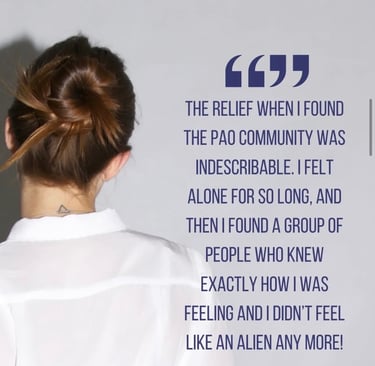
A strong theme throughout the discussion was the value of speaking with other women who understand the condition firsthand.
Many described how peer support had helped them feel less isolated, more informed and more hopeful about the future.
The UK WhatsApp group and international Facebook group were both mentioned as important sources of ongoing day-to-day support, practical advice and reassurance.
Many mothers felt that hearing from women further along in recovery was especially valuable in the early stages after diagnosis.
What has helped physically
Attendees discussed a wide range of practical strategies that have helped them cope with pain, movement and daily life.
Several women said that finding knowledgeable healthcare professionals was vital, particularly specialists and physiotherapists who understood PAO.
Keeping gently mobile within safe limits was generally felt to be important, although many stressed that movement advice needs to be individualised. Mothers highlighted the importance of physiotherapy support to help avoid further fractures and rebuild confidence safely.
Some women described how private healthcare, including scans, physiotherapy, therapy or specialist consultations had helped them access support more quickly when NHS services were delayed.
Treatment with teriparatide or biosimilar medications was described by some mothers as “lifechanging” and a “lifesaver,” helping stop ongoing fractures and allowing them to move forward with their lives.
Pain management was also discussed in detail. Mothers shared that different approaches worked for different people, often through trial and error. Helpful measures mentioned included:
Heat pads and hot water bottles
Pain medication
Lidocaine patches or infusions
TENS machines
Supportive seating
Rest and pacing activities.
Occupational therapy aids such as grabbers, perching stools, bed levers and toilet frames were also described as helpful during the early stages.
Some women found body braces or physiotherapy taping useful in moderation, while others had been advised against braces altogether. Concerns were raised about overuse leading to muscle weakness, highlighting the importance of specialist guidance.
Many mothers also spoke honestly about the practical realities of caring for babies and toddlers while living with spinal fractures. Coping strategies included floor beds, “floor living,” encouraging toddler independence and asking others for help with lifting and carrying.
Asking for help and communicating the condition
Communicating the seriousness of PAO to others was described as both important and difficult.
Many said they had learned to be more specific about their needs and limitations, rather than minimising their pain.
Several women reflected that saying they had “back pain” often led others to compare it to ordinary backache, whereas describing it as “a broken back” better conveyed the seriousness of vertebral fractures.
The discussion also highlighted how difficult it can be emotionally to ask for help, particularly for mothers used to being independent.
Over time, many had learned that small adjustments and practical support can make a significant difference to quality of life.
Attendees also discussed the importance of communicating clearly with healthcare professionals, family, employers and friends about the reality of living with an invisible condition.
Diagnosis and the need for awareness
A major topic throughout the session was the ongoing difficulty many women face obtaining a diagnosis.
Attendees described long delays, repeated dismissal of symptoms and challenges accessing scans and specialist care.
At the same time, many mothers described the relief that came with finally receiving a diagnosis and understanding that their pain was real and had a cause.
There was strong agreement that greater awareness and education about PAO is urgently needed, both within healthcare and more widely.
Women also discussed the difficult “limbo” period immediately after diagnosis, when many are still in severe pain but are trying to understand the condition and access appropriate support.
Suggestions for future information on the PAO UK website included:
Guidance on safe movement and physiotherapy
Breastfeeding information
Advice on obtaining appropriate medical care in each region and country
Practical strategies for caring for babies and children safely.
The discussion also highlighted how difficult and conflicting medical advice can sometimes be, particularly around issues such as breastfeeding, body braces and treatment options.
Moving forward
The session ended with a shared understanding that while PAO can be life-changing, many women do gradually rebuild their lives with time, support and the right care. Peer support remains a central part of that process.
During the session, Karen Whitehead MBE also provided an update on the newly registered PAO UK charity and explained that a further dedicated charity update meeting will be held later in 2026, once the charity’s first annual return and accounts have been filed with the Charity Commission and the Annual Report has been published on the PAO UK website. This future session will provide more detail on the charity’s activities, strategy and forward plans. In the meantime, updates about charity work, campaigns and events continue to be shared through the PAO UK website and social media channels.
Together with ongoing virtual peer support sessions and Ask the Expert events, we also plan to run future “Have Your Say” sessions to help ensure the charity’s work continues to be informed by the latest experiences of women living with PAO in the UK. Listening to patients and families remains central to improving awareness, support, advocacy and future care.
PAO UK can also signpost women to the international private Facebook group and UK WhatsApp support group for ongoing peer support.